Your facility needs regular sanitation protocols tailored to unique hazards, daily throughput, food allergens, and inspection schedules, including auditable records validating HACCP requirements, compliance audits, and public health regulations. The details below provide guidance on sanitation program requirements.
Main Points
- Brampton food safety cleaning experts assist restaurants, grocery departments, commissaries, warehouses, bakeries, schools, mobile vendors, and allergen-sensitive operations.
- They disinfect high-touch surfaces, food-contact equipment, kitchens, floors, drains, restrooms, and storage areas using zone-based workflows to eliminate cross-contamination.
- Logging of conclusion through checks, audits, and correction logs validates trained contractors have confirmed approved sanitizer dilution, appropriateness, and contact time.
- Everyday, weekly, and seasonal tasks designated by zone constitute cleaning schedules grounded on risk, production volume, switches, incidents, and regulations.
- Prioritize suppliers displaying hazard analysis knowledge, health regulatory expertise, WHMIS preparation, coverage, references, color-categorized instruments, and audit-ready hygiene files.
Brampton Facilities That Need Food Safety Cleaning: Which Ones?
You must follow food safety cleaning if your establishment is covered by public health review, food regulations, or HACCP systems. This covers restaurants, cafeterias, commissaries, grocery food departments, butcher shops, seafood counters, convenience stores, and institutional kitchens.
Documented food safety measures is required in distribution centers, manufacturing facilities, cold storage areas, bakery retailers, educational meal programs, banquet venues, and meal delivery services. Seasonal and mobile businesses apply similarly, including catering trucks, festival vendors, and pop-up food booths. Your facility needs documented cleaning protocols whenever your workers process ingredients, portion ready-to-eat items, reheat products, or store allergens. In Brampton, sanitation remains not optional; it comprises lawful, operational, and customer protection standards.
Which Areas Do Brampton Cleaning Experts Cover?
Your facility requires professional cleaners who sanitize all high-touch areas, kitchens, all floor types, and restrooms to maintain food safety compliance and public health standards. These zones receive attention because they represent the most significant contamination risk, trip and slip dangers, and breaches of sanitation codes.
By understanding their service scope, you are able to confirm your facility's cleaning procedures satisfy all operational and regulatory requirements.
Disinfecting High-Touch Zones
Addressing high-touch surface cleaning is vital for Brampton sanitation specialists because high-traffic areas can transmit pathogens and contaminants within a facility. You should establish a scheduling system for sanitizing door handles, push plates, switches, railings, shared equipment controls, POS terminals, and refrigerator pulls. Implementing surface identification mapping, experts pinpoint every regularly used zone and establish cleaning frequency
If verifying sanitizer compatibility, dilution, and contact time, check company specifications and health codes to copyright effectiveness. Professionals can apply swab testing to validate sanitization success
Cooking Zones, Walking Surfaces, and Restroom Environments
Brampton cleaning services zero in on kitchens, floors, and restrooms as each zone presents different sanitation, slip-and-fall, and wellness concerns. In industrial kitchens, you need grease removal from cooking stations, appliance surfaces, drain systems, preparation areas, and backsplashes to reduce contamination and pest pressure.
You should also expect documented flooring maintenance. is likewise provided as part of the service.
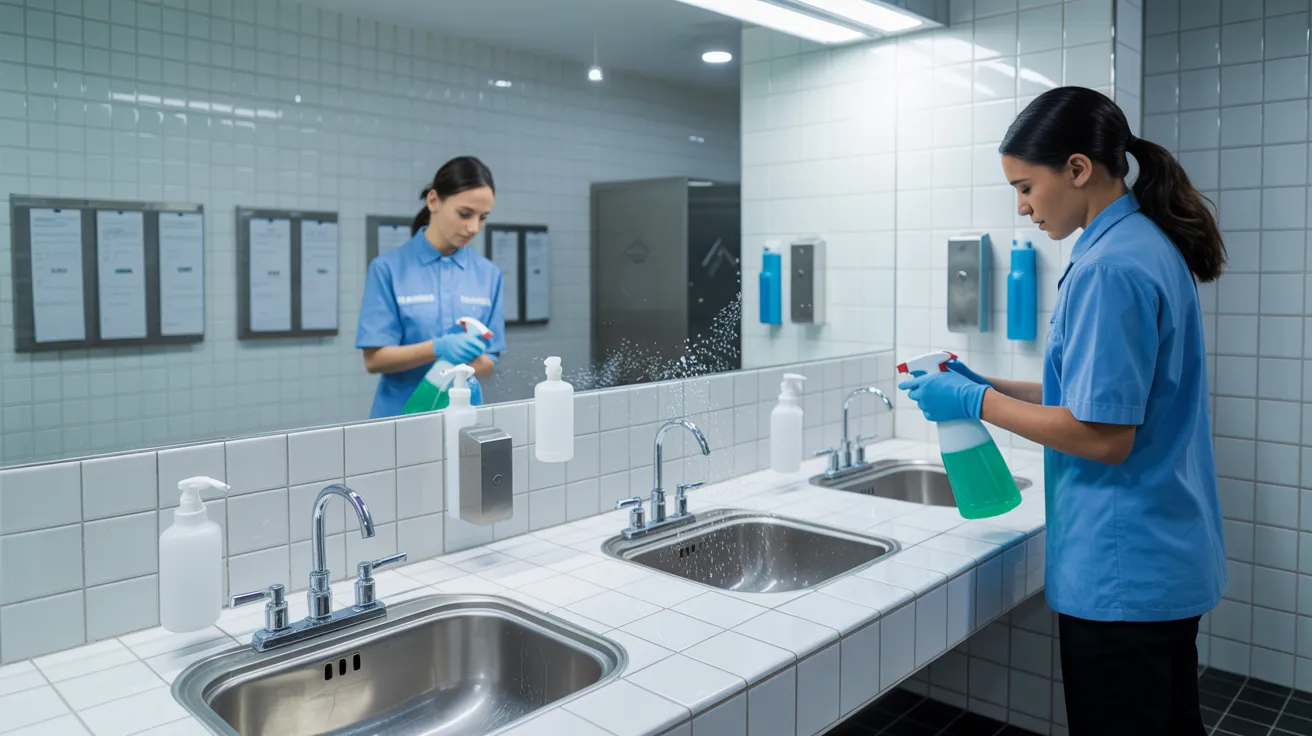
For restroom sanitation, cleaners sanitize high-touch surfaces, bathroom fixtures, stall dividers, supply dispensers, and trash receptacles, then replenish amenities and manage odor. They also maintain restaurant cleaning supply rooms where product storage, sink cleanliness, and drain systems impact daily sanitation standards and worker protection.
How Food Safety Cleaning Benefits Brampton Operations
To comply with health code requirements and succeed in audits, Brampton facilities must maintain food-safe cleaning standards. You also reduce cross-contamination by cleaning and sanitizing food-contact surfaces, equipment, and high-touch areas correctly. Most importantly, you help protect community wellness by reducing the chance of food poisoning in your establishment.
Sanitary Standards Adherence
Because Brampton food establishments operate under strict public health standards, food safety cleaning directly affects your ability to meet health code requirements, defend customers, and avoid enforcement action. You must maintain clean food preparation areas, documented cleaning schedules, correct sanitizer application, and verifiable staff procedures that align with municipal and provincial inspection expectations.
Should your cleaning standards decline, you face violations, corrective orders, public perception issues, and service interruption risks during additional reviews or enforcement reviews.
Cross-Contamination Management
Adhering to regulatory guidelines requires your expertise in stopping cross-contamination throughout daily food handling and cleaning. You need to separate raw ingredients from ready-to-eat foods, clean prep surfaces between tasks, and store cleaning supplies separately from food. Structured procedures reduce transfer risks and maintain ongoing regulatory adherence.
You should implement allergen segregation to prevent major allergens from touching shared surfaces, containers, or equipment. Employ separate boards, labeled implements, and careful equipment identification so staff don't mix items throughout cooking or serving. Mandate washing hands following raw meat, seafood, eggs, or allergen-containing products. Change cleaning rags frequently, and verify sanitizer strength with test strips. When you train staff to follow these controls each work period, you build a more hygienic, secure workplace that meets Brampton's food safety expectations daily.
Public Wellness Protection
When food safety cleaning breaks down, you don't just face inspection failure—you increase the chance of food-related sickness affecting customers, staff, and the wider Brampton community. You also undermine your responsibility in protecting public health, especially in busy food facilities where pathogens travel quickly through surfaces, equipment, and touchpoints.
You require sanitation systems that remove contaminants, disinfect appropriately, and confirm results. This involves maintaining exposure durations, using authorized sanitizers, documenting procedures, and coaching employees to satisfy regulatory requirements. These measures prevent pathogen control by decreasing microbial counts before contaminating food or hands. Throughout Brampton, effective sanitation protects vulnerable communities, minimizes disease potential, and demonstrates your diligence. When you follow proper protocols, you go beyond requirements—you mitigate risk and enable safer food service throughout the area.
How Does Cleaning Support Food Safety Compliance?
Upholding strict sanitation practices backs food safety compliance by lowering contamination exposure, preventing pathogen multiplication, and keeping your facility aligned with sanitation requirements under HACCP-based programs and public health regulations. You confirm that contact surfaces stay visibly clean and microbiologically controlled, enabling documented preventive controls and inspection readiness.
Cleaning programs additionally fortify allergen mitigation by eliminating residues that can trigger undeclared allergen exposure.
When Ought You Plan Commercial Cleaning?
Cleaning plans are most effective when you set them according to risk levels, output volume, and compliance needs rather than using only a fixed calendar alone.
Schedule cleaning before and after promotional occasions, functions, or public [[functions for effective event turnarounds.
Selecting the Right Brampton Cleaning Experts: Key Considerations
Evaluate providers context information first by sanitation compliance standards rather than price alone. You must ensure each provider understands CFIA, public health, and HACCP-aligned expectations for your business. Request proof of insurance, WHMIS compliance, staff training documentation, and supervision methods. Check technician understanding of cross-contamination risks, chemical safety, and traceable sanitation records.
You should further examine operational reliability and accountability. Request references from food facilities in Brampton, then review response times, corrective-action procedures, and communication protocols. Validate the company supports supplier audits and can supply compliance documentation to authorities or third parties. Confirm equipment receives maintenance, colour-coded tools are applied correctly, and site-specific hazards are recognized. A experienced service ensures regulatory compliance, product integrity, and your brand reputation.
Which elements are part of a Food Safety Cleaning Plan?
Establish a documented plan that clarifies every sanitation duty, standard, and accountability before production begins. You should specify cleaning frequencies, approved chemicals, dilution rates, contact times, tools, and verification methods for each sector, surface, and equipment. Add pre-operational inspections, corrective actions, and employee training requirements.
Your plan should also address cross-contamination controls, waste handling, pest-prevention measures, and documented schedules for restrooms, drains, floors, and food-contact areas. Explain how you'll separate raw and ready-to-eat processes, support ingredient tracking, and ensure accurate allergen labeling through validated cleaning between product changes. You should assign accountability, maintain signed records, and review results against regulatory standards, HACCP controls, and customer requirements. When gaps appear, update procedures immediately and re-educate staff.
Regular Asked Questions
Do sanitation providers work during nighttime hours at Brampton properties?
Yes, you can arrange sanitation coverage to manage overnight shifts in Brampton facilities. You'll organize overnight sanitation around operational windows, security measures, and staffing requirements. Services generally map nightshift procedures to minimize interruption, maintain standards, and document completed tasks. You should confirm arrival timeframes, management, access protocols, and waste handling before beginning service. If you operate regulated spaces, you'll also want cleaning records that support inspections and internal quality assurance.
Do sanitation professionals provide emergency spill response solutions?
Yes, you can locate Brampton cleaning professionals providing hazard containment services. They handle hazardous incidents, evaluate risks, isolate contamination, and begin swift decontamination to reduce risk and prevent business disruption. You should verify response rates, credentials, safety protocols, and disposal methods. If your facility must meet compliance standards, select a service that documents events, follows procedures, and supports verification.
Will plant-based disinfectants protect safely food preparation areas?
Definitely, eco-friendly disinfectants perform safely on food-contact surfaces if you purchase items marked food-safe that meet regulatory compliant. You should check exposure duration, dilution rates, and rinse requirements before use. Plant based formulas minimize toxic chemical contact, but you should obtain confirmation of performance against specific pathogens. To keep surfaces residue-free, stick to exact manufacturer guidelines and verify your disinfectant meets food industry regulations.
Can sanitation programs change with seasonal shifts?
Certainly, cleaning plans adapt to production fluctuations readily. Adapt frequencies, personnel, disinfectants, and verification steps to match with operational cycles while preserving regulatory requirements. Minimize production downtime through scheduling cleaning alongside line changes, maximum output, and operational patterns. Concurrently update written procedures, staff education, and environmental testing to reflect transient threats, novel allergens, or increased soiling. Scheduled reviews ensure the schedule functional.
Will commercial cleaners train employees on sanitation best practices?
Absolutely, commercial cleaners regularly deliver staff training on sanitation best practices. Your staff gets training on proper chemical use, contact times, contamination avoidance, equipment disassembly, and paperwork. They typically align instruction with HACCP, GMP, and CFIA or regional health authority requirements. Many conduct health inspections to ensure adherence, identify gaps, and reinforce corrective actions. This helps you maintain consistent procedures, clear audits, and reduce food safety risks consistently.
Conclusion
Partnering with Brampton commercial cleaning and food safety experts goes beyond tidying—it ensures your facility meets inspection standards and your standards are defensible. From processing facilities to kitchens, each sanitized surface and maintained corner lessens contamination risk and prevents major expenses. By arranging service on appropriate schedules and implementing a thorough cleaning program, you shield your workforce, clients, and your image. In a heavily regulated sector, clean environments can't be overlooked—they're vital to proper management.